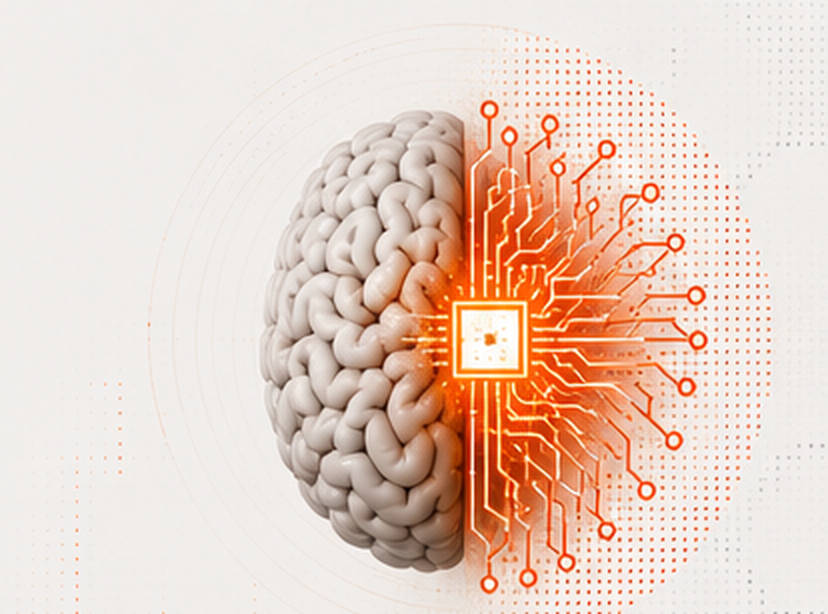
CityLab Urban Intelligence Approach
CityLab defines Urban Intelligence not simply as a city’s ability to use technology, but as its capacity to combine accumulated knowledge, human experience, governance capacity and urban memory with data, technology and artificial intelligence.
Developed by Serdar Aslan, this approach moves beyond technology-centred smart city models. Its main objective is to strengthen the city’s accumulated knowledge through technology and transform it into better, faster and more sustainable urban decisions.
What Is Urban Intelligence?
Urban Intelligence is the capacity of a city to transform its accumulated knowledge, experience, governance vision, planning capacity, economic structure, democratic intelligence and sustainability approach into better urban decisions through the use of data, technology and artificial intelligence.
In other words, Urban Intelligence is the ability to process, interpret and apply a city’s accumulated knowledge to future governance decisions.
Urban Intelligence Formula
The core formula of the CityLab Urban Intelligence approach is:
Urban Intelligence = Urban Accumulation × Technological Multiplier
In this formula, technology is not Urban Intelligence itself. It acts as a multiplier that strengthens the knowledge and experience already accumulated by the city.
Urban Accumulation
Urban Accumulation = Urban Memory + Human Experience + Governance Vision + Planning + Economy + Democratic Intelligence + Sustainability
Urban Accumulation represents the collective knowledge a city develops through its history, people, institutions, economy, planning decisions and governance experience.
Past disasters, mobility patterns, public-space use, trade culture, local practices, successful policies and failed decisions all contribute to this accumulated urban knowledge.
Technological Multiplier
Technological Multiplier = Data × Technology × Artificial Intelligence
Data, sensors, digital platforms, the Internet of Things, data analytics and artificial intelligence are tools that help cities interpret their accumulated knowledge more quickly and accurately.
In the CityLab approach, technology is not the goal. It is the multiplier. Its value depends on how effectively it transforms urban accumulation into better decisions.
From Urban Memory to Urban Intelligence
Urban memory is not only about preserving the past. Its real value emerges when accumulated knowledge and experience are used to solve present problems and guide future decisions.
When a city learns from previous challenges, supports that experience with data and integrates those lessons into new decisions, urban memory becomes an active governance capacity.
From Urban Memory to Urban Intelligence.
From Smart Cities to Urban Intelligence
For many years, smart city approaches have focused primarily on technology, sensors, connected infrastructure and digital services.
Urban Intelligence goes further by combining these technological capabilities with urban memory, human and local experience, governance vision, economy, democratic intelligence and sustainability.
The key question is therefore no longer only:
“How technologically advanced is the city?”
but rather:
“How effectively can the city transform its accumulated knowledge into better decisions through technology?”
How Is Urban Intelligence Measured?
Urban Intelligence cannot be measured solely by the level of technology adoption.
A city’s:
- governance capacity,
- ability to use urban memory,
- data quality,
- integration of human and local experience into decision-making,
- planning performance,
- economic capacity,
- democratic governance structure,
- sustainability performance,
- and meaningful use of technology
must be assessed together.
CityLab therefore approaches Urban Intelligence as a multidimensional, measurable and comparable governance capacity.
CityLab Score AI and Urban Intelligence
CityLab Score AI is a decision-support and assessment system designed to evaluate not only technological infrastructure, but also governance, quality of life, sustainability, resilience and overall urban performance.
Score AI is one of CityLab’s main tools for transforming the Urban Intelligence approach into a measurable and applicable framework.
While Urban Intelligence provides the conceptual framework, CityLab Score AI strengthens its measurement, assessment and decision-support dimensions.
Research and Application Areas
CityLab develops Urban Intelligence not only as a theoretical concept, but as a practical framework that can be applied across different areas of urban governance.
Key research and application areas include:
- urban memory,
- local governance,
- smart and sustainable cities,
- urban resilience,
- transport and mobility,
- environment and climate,
- energy and resource management,
- public space,
- digital transformation,
- data and artificial intelligence,
- local economy,
- urban experience,
- measurement and decision-support systems.
The objective is to bring together a city’s accumulated knowledge and today’s technological capacity within the same decision-making framework.
CityLab and Urban Intelligence in Daily Sabah
Serdar Aslan and CityLab’s urban intelligence approach was featured in Daily Sabah in the article “Beyond Smart Cities: Building Urban Intelligence from Memory.”
https://www.dailysabah.com/life/beyond-smart-cities-building-urban-intelligence-from-memory/news/amp
The article examines how urban memory, human experience, local knowledge, governance capacity, data, technology and artificial intelligence can be brought together in the future of urban governance through the Urban Intelligence work developed by Serdar Aslan and CityLab.
This publication represents an important reference for bringing CityLab’s Urban Intelligence approach to a broader international, professional and academic audience.
Urban Intelligence = Urban Accumulation × Technological Multiplier
Serdar Aslan
Urbanologist | Urban Intelligence Researcher | Smart and Sustainable Cities Specialist
#UrbanIntelligence #CityLab #UrbanMemory #SmartCities #UrbanGovernance #ArtificialIntelligence #SustainableCities #UrbanInnovation
